
 What should I eat?
This is a question I’m sure most of us have asked ourselves on numerous occasions. It can be difficult to find food that’s both healthy and affordable, and while many people want to eat healthfully, some don’t have the time, education or resources to do so. To answer the question “What should I eat?”, it is important to first answer the question “How should I eat?”
There are many free, user-friendly resources out there to help us answer the latter question. In general, these resources will explain that nutrition is a major component of leading a healthy lifestyle. From reading about nutrition, one will quickly discover that our eating habits dictate our weight, emotions and sleep patterns, among other factors. Proper nutrition includes having a well-balanced diet of fruits, vegetables, grains, protein and dairy.
The United States Department of Agriculture (USDA) has been instrumental in streamlining dietary guidelines for the public to use. In the past, the USDA used a Food Pyramid to represent the 5 food groups and their proper portions. Recently the USDA switched from the pyramid to a plate. The new initiative is called MyPlate and resembles a pie chart with unequal sections. The USDA hopes that MyPlate will improve America’s diet and address the escalating burden of obesity and diabetes.
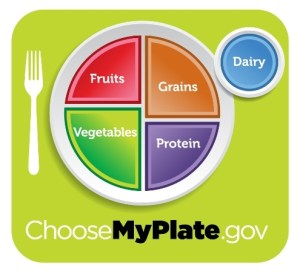
On MyPlate, you will see that fruits and vegetables, which are the foundation of a healthy diet, take up half of the plate. Some people say a meal is incomplete without meat; I say it’s incomplete without fruits and vegetables. Fruits and vegetables are the source of nutrients that help to regulate our bodily functions. Eating these foods may protect against certain type of cancers and lower one’s risk for heart disease. Grains, like rice, bread, and pasta are rich in fiber and are key factors in reducing high blood pressure. Careful, though: Grains can be high in calories, which is why they are smaller than vegetables on MyPlate. Proteins such as beef, chicken, and eggs give us the energy we need throughout our day. It’s important to remember that your meat and poultry should be lean because proteins like beef can raise “bad” cholesterol levels. Finally, the smallest portion, dairy, are those foods made from milk. This includes cheese, fluid milk and puddings. Dairy products help to fortify our bones and reduce our risk of bone and joint related diseases. Like proteins, dairy products can have a large number of calories. For example, if you drink whole milk, it is suggested that you drink reduced fat (2%) or even fat-free (skim). These are healthier options and provide the same nutrients.
Making the right, healthy choices isn’t always easy—but it can be done. Changing your diet takes time and may require doing a complete over-haul of what you are used to eating. Though some things may taste different when you change your diet, you’re making a conscious decision for yourself and your family to live longer, healthier lives.
Bon Appétit!
—
Jonathan T. Reid, MPH is a clinical researcher and the new Lead Health Educator and Health Blogger for Dance Daze. He has a B.A. in Psychology and a Master of Public Health degree from New York University.

 We are delighted to report that the re-launch of our Toddler Yoga Child & Caregiver class was a complete success! We had a small group of 4 students and parents, and the class instructor provided a wonderful blend of yoga poses, stretching, and fun sing-a-long movement time for the children. What I loved best about the class was the well-planned variety! Toddlers were able to try most of the movements on their own, but some required parent participation. Also, there were times when the children were able to be independent, while still maintaining a feeling of attachment to their parents. (e.g., the children crawling from one side of the room toward their parents on the other side of the room). And in case you’re wondering: If all the movements are done full-out, parents will get a nice workout in from this class too!
 Dance Daze, Inc.